The purpose of forming an organization is to create a place where individuals can produce collectively what they cannot do alone. And, in a positive environment, they can achieve great things when they agree to join forces. Unfortunately, this isn’t happening; at least, not to the extent that it needs to for America to remain globally competitive.
The disruptive nature of today’s economy, where cutbacks, layoffs, and terminations are pervasive, has generated a feeling of insecurity nationwide. The resulting pressure to “do more with less” has created a rift between employers and employees. Serious job seekers are frustrated by the lack of sustainable career paths. As a result of all the confusion and uncertainty, an atmosphere of distrust has crept into the workplace.
This headline from a recent article in the Washington post describes the changes that are impacting the labor market: Why the U.S. job market is so hard, especially for recent college graduates. “Hiring has slowed even as the economy keeps growing, and millions of workers are navigating a labor market that no longer follows the rules.”
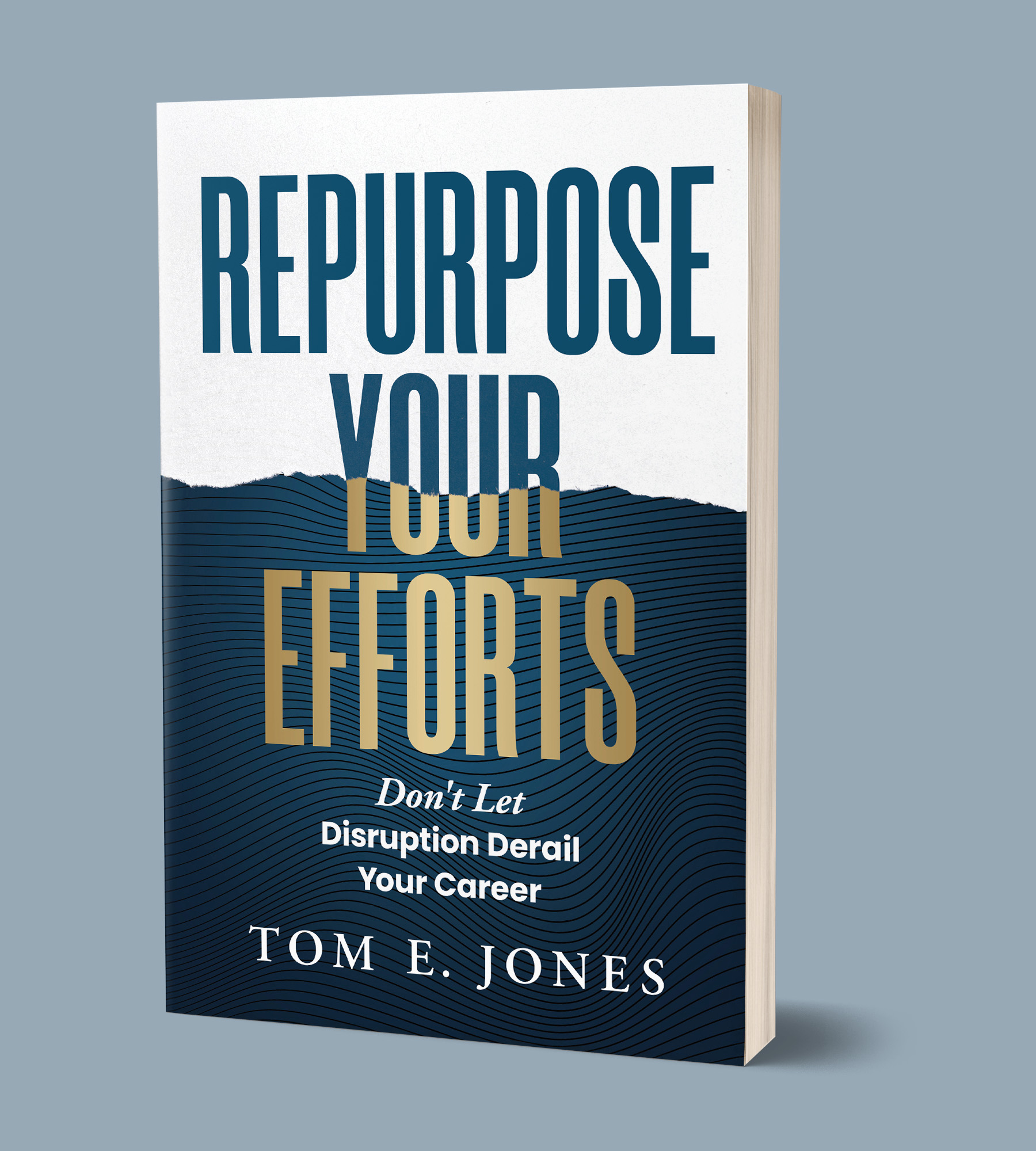
The following excerpt from, Repurpose Your Efforts: Don’t Let Disruption Derail Your Career, succinctly describes what’s behind the current turmoil, “Workplaces today are navigating a complex landscape shaped by both past practices and present realities. Organizations are under constant pressure to remain adaptive and productive in the face of accelerating economic change, global competition, shifting societal expectations, and political uncertainty. The challenge is no longer simply about maintaining performance—it is about evolving in ways that sustain relevance and resilience.”
The way in which people in both the public and private sectors view their role in the workforce is also causing problems. The most serious of which is that labor and management think and act independently when a disruption occurs. Rather than pull them together, it drives them apart.
Motivated by the fear of failure and anxious to avoid blame, these two advisories reluctantly come together—not to address the challenges, but to engage in finger-pointing, faultfinding, and face-saving. Meanwhile, the problems fester and their relationships suffer as a result.
We must repurpose the way organizations and the people they employ interact when faced with disruption. But you may ask, can something be done that will make a measurable difference in a timely manner and not cost a ton of money?
The answer is yes. There’s a lot we can do that won’t take a long time or cost a lot of money. All it requires is for us to stop pitting management and labor against each other. By bringing a collaborative spirit into the workplace, we can create a “we-ness” that isn’t there now.
Historically, children have been raised to believe that if they get good grades and a good education, they’ll get a good job with a good company and have a good life. This “great American dream” may have been feasible at some point in the past, but not anymore. It’s up to you to make your own way in the world today.
The newer generations understand this reality, but there are still a significant number of believers who view the corporation as a place that will provide a good living until their pension kicks in.
In contrast, employers in today’s disruptive economy don’t consider employees as dependents and they don’t feel responsible for their careers either.
Job seekers focus too much on finding a position that’s a good fit for them and supports their lifestyle. Instead, they should be looking for answers to the only question that truly matters: What can I do to make this organization sustainable?
To prosper a company must continually add value to its products and services. If it can’t reduce costs, attract new customers, and make a profit, it will cease to exist. Consequently, employees can’t expect to keep their jobs unless they take a proactive role in the prosperity of their employer.
Whenever consultants interview employees in a struggling organization, they hear two recurring themes: “It’s not my fault, I just work here,” and “It’s management’s problem, go talk to them.” These same employees feel entitled to their jobs regardless of how much they contribute to the bottom line.
Full disclosure regarding the potential downside of disruption exposes everyone to the truth about the challenge they’re about to face. More importantly, it triggers the search for new tools and new ways to facilitate the transition. Lastly, it generates a new set of critical questions like:
- Who will be in charge?
- Are we missing something?
- What is the chain of command?
- Whose help are we going to need?
- What current resources are available??
Employees need answers to these questions before they’re ready to let go of the past and embrace the future. Fortunately, the most reliable employees will immediately offer suggestions for how to improve outcomes as it develops.
You’ll know when this happens because their focus shifts from the past to the present with a view toward their future. They’ll start posing task-based questions like:
- How is what I’m supposed to do now different from what I did before?
- What consequences will I face if I’m unable to do what’s required?
- How much time do I have to reach an acceptable level of performance?
- If I need assistance, what resources are available and how do I acquire them?
Leaders and followers put forth their best efforts when both are ready to act as a unified force. It’s gratifying to watch people shift their attitudes toward disruption when they realize that it is not just about them but about their organization undergoing a critical transformation.
You’ll know disruption is having a positive impact when those around you are discussing the benefits of doing the right things the right way for the right reasons. It’s at this point that the disruption takes on a life of its own and begins to unfold naturally.